
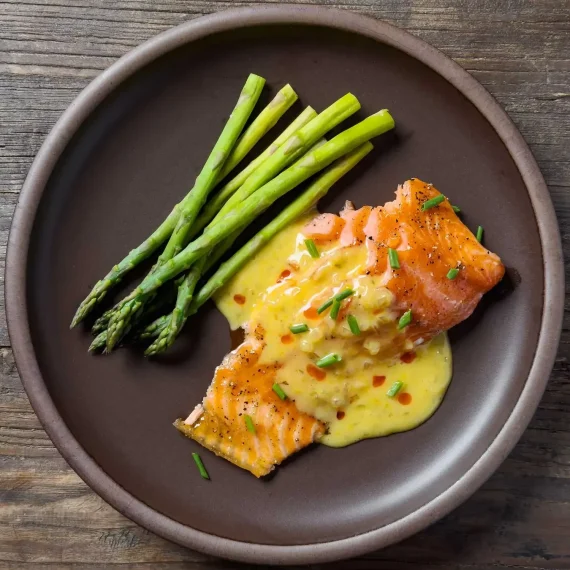
There’s No Need to Save This Recipe For a Special Occasion!
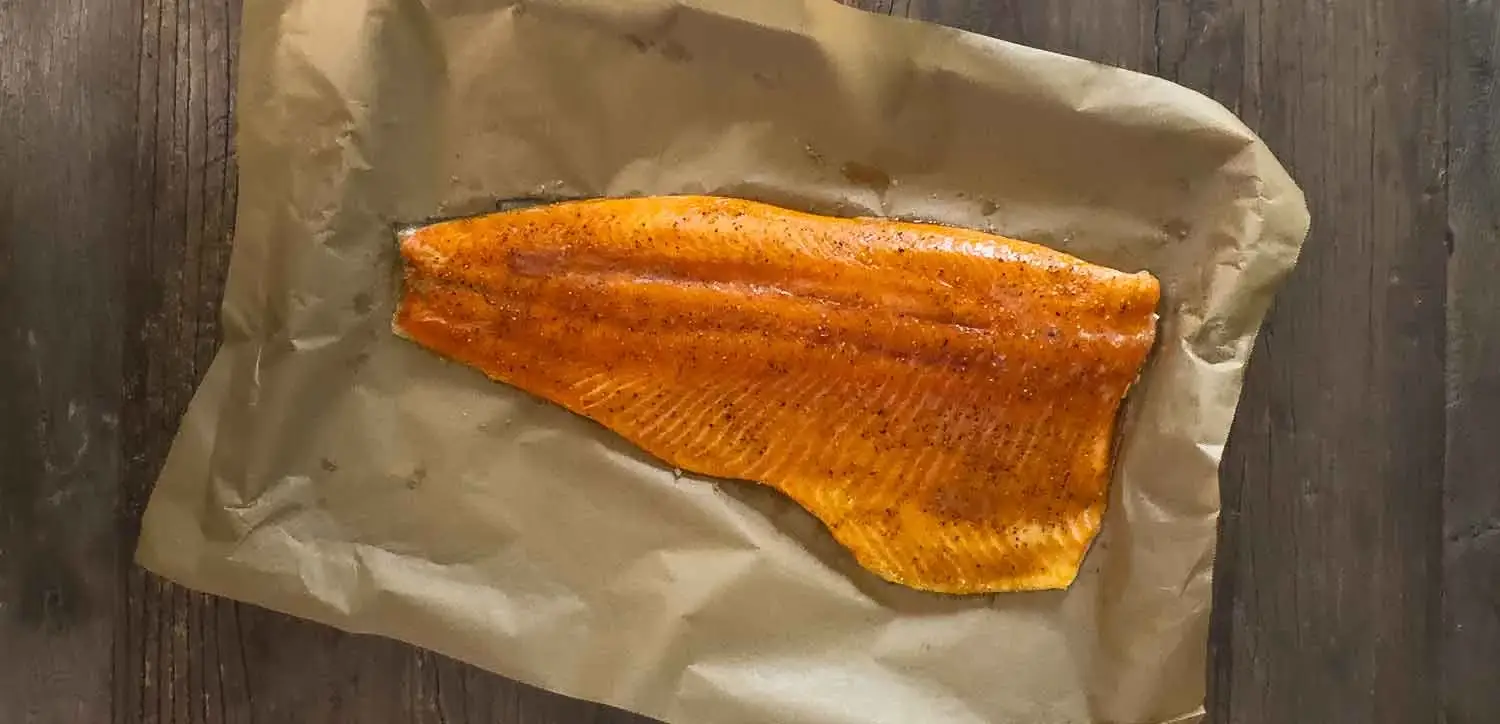
Does this look fancy to you? I guess it kind of does. But trust me when I tell you it’s an easy meal and there’s no reason you can’t serve this to your family whenever the urge strikes. Let’s begin with the steelhead trout. It’s wonderful, but if you can’t get it, salmon will also work beautifully here. Either one takes very well to low and slow cooking. Pop it in a 250° oven for 20 to 25 minutes and you’ve got perfectly cooked fish. At least it’s perfectly cooked for my taste. I like my steelhead or salmon only cooked to approximately 125°. A little more won’t hurt it, but after 130° it starts getting into overcooked territory and I don’t like either of these fishes cooked until they’re well done. Use an instant read thermometer and you can’t make a mistake. This cooking method could not be any easier.
So, now that we’ve got that out of the way, let’s move right onto the beurre blanc. I still remember the first time I tasted it and I have loved it dearly since that day many years ago. I was taking a classic French cooking class from a French chef, I went home and immediately made it that same evening. It was startling to me that something so delicious could be made so easily. It wasn’t until years later that I started reading about the potential pitfalls when making this sauce. It surprised me because I’d never run into a problem when making it and I didn’t have any idea that it could go wrong so easily.
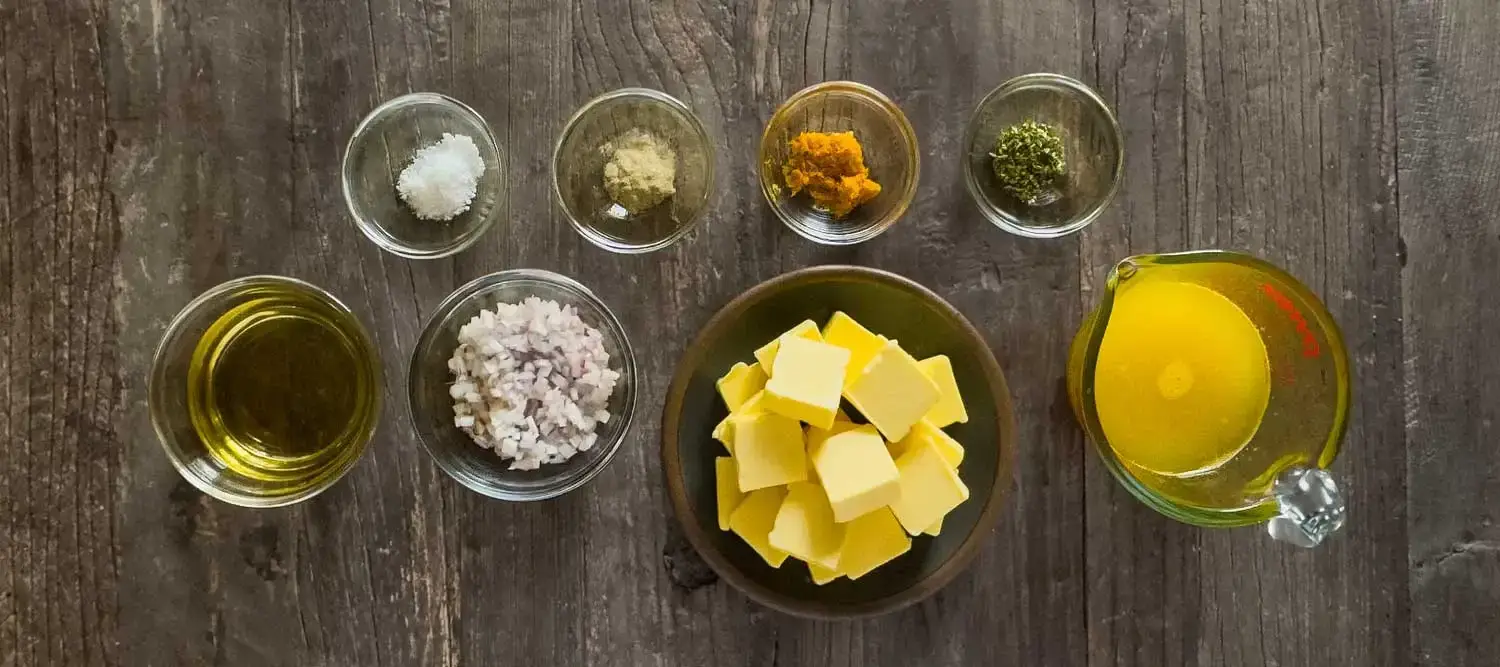
What this taught me was that if you’re taught how to make it correctly the very first time you encounter a recipe, you’ll never run into a problem when making it. I wanted to use orange juice this time, rather than the normal lemon juice version, so I began by cooking down fresh squeezed orange juice, orange zest, dry white wine, minced lemon thyme, and plenty of minced shallots in a saucepan. I let it cook over medium heat until there was only about 1 1/2 tablespoons of liquid left in the bottom of the pan. I pulled my sliced butter from the fridge, added a couple of tablespoons to the pan and whisked them until they’d melted. It will look milky and this is what you want. It should not look like melted butter.
Now, here is where you need to have good instructions. At this point, place your hand on the underside of your pan. It should be too hot for you to keep your hand there for more than 1 second. Remove the pan from the heat and whisk in 3 more slices of butter. Whisk vigorously. You will always need to whisk vigorously when making this sauce. This is the only way you will emulsify the butter into the reduced liquid. Unlike a béarnaise or hollandaise, there are no eggs in this sauce, so the butter has to be whisked at all times in order for the sauce to emulsify.
The correct temperature is just as important in order to keep the sauce from breaking. I just keep whisking in the butter and checking the temperature by placing my hand on the underside of the pan. Once I’m able to comfortably hold my hand there for 2 seconds, I put it back on medium low heat, while continuing to whisk away and adding more slices of butter after the previous slices have melted into the sauce. I continue in this way until all the butter has been added – on and off the heat as needed.
You’ll notice that I do not add my butter one slice at a time. I’ve discovered through years of making beurre blanc, that contrary to most everything I’ve read, I do not find it necessary to add the butter one slice at a time. It doesn’t hurt the sauce at all to add the butter 2 or 3 slices at a time. It’s quicker, so that’s the way I do it. Your sauce should be silky and creamy. I never strain out the shallots because I love biting into those little bits, but feel free to do so if you want an entirely smooth sauce.
At this point, I taste the sauce for seasoning. I cook almost exclusively with salted butter, except for when I make either beurre blanc or béarnaise sauce. I find that the salt level is so crucial in these sauces, it can turn out over salted if I use salted butter. There is a fine flavor balance in beurre blanc. The butter, acid, and salt need to be perfectly balanced and it doesn’t take a lot of salt to achieve the right flavor.
You may find you need to add a little bit of lemon juice or mild vinegar if it seems flat tasting. A little white pepper should then finish it off nicely. Beurre blanc will hold for a little while if you keep it in a warm spot. I let it sit on the warm stovetop and whisk it occasionally. But it won’t hold for long. I wouldn’t make it more than 15 minutes before serving it. If it sits, it starts getting too thick. If this should happen, whisk in a teaspoon of very warm water and it should loosen up.
If you find yourself with leftover sauce, chill it in the fridge and serve it as a compound butter. A little scoop on top of something warm is delicious as it slowly melts.
Besides the beurre blanc, I also wanted some chili flavor for this dish, so after I topped the fish with the sauce, I spooned several drops of chili oil on top of each serving. You can use the oil from a jar of chili crisp, store bought chili oil, or you can very easily make your own, which is much better than any I’ve ever purchased. I keep a jar of my homemade chili oil on hand at all times because it’s so simple to make.
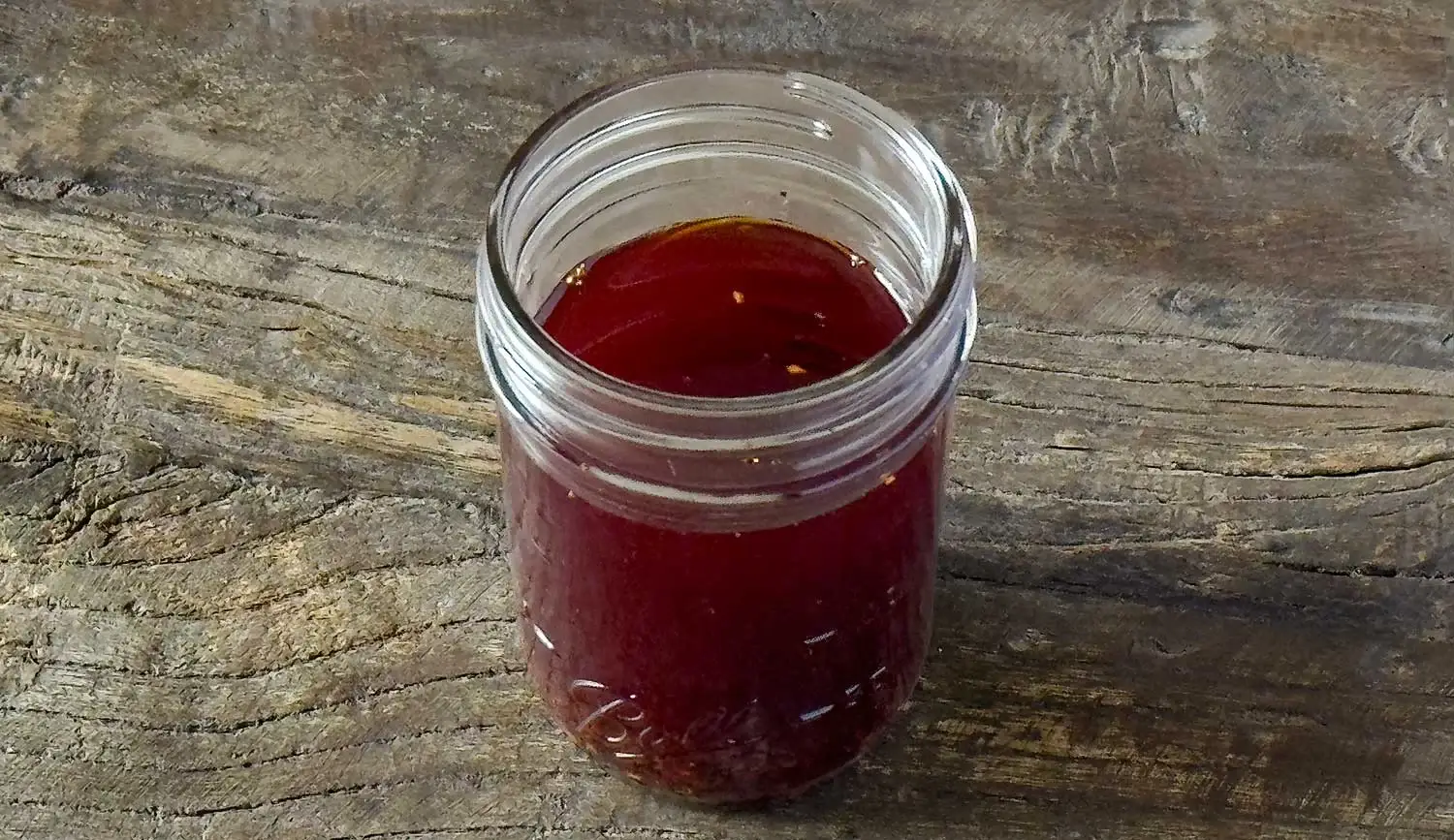
Here’s how I do it. In a large heatproof bowl, stir together chili flakes and chili powder. These can be all different kinds. Depending on what I have at the moment, I’ve used gochugaru flakes, morita chipotle flakes, peperoncini, etc. Same goes for the chili powder. Just make sure it’s a pure chili powder such as Kashmiri, New Mexico, etc. You want to use half flakes and half powder for a combined total of 1/3 cup. Then I stir in 2 teaspoons crushed Sichuan peppercorns, a large pinch of salt, about a teaspoon of sugar, 1/2 teaspoon crushed fennel seeds, a pinch of cinnamon, and a couple tablespoons of sesame seeds.
I then heat 2 cups of neutral vegetable oil to 225°, pour it in the bowl and stir it all up. That’s it. That’s all there is to it. This is not chili crisp. There’s no garlic, etc. in it, which I think makes it more versatile. I leave this chili oil sitting out on my counter in a sealed jar because I use it so often. And I use all of it – the solids as well as the oil. I spoon it on baked potatoes, rice, cooked veggies, grilled meats, a little bit in tomato sauces, etc. I don’t let myself run out of it.
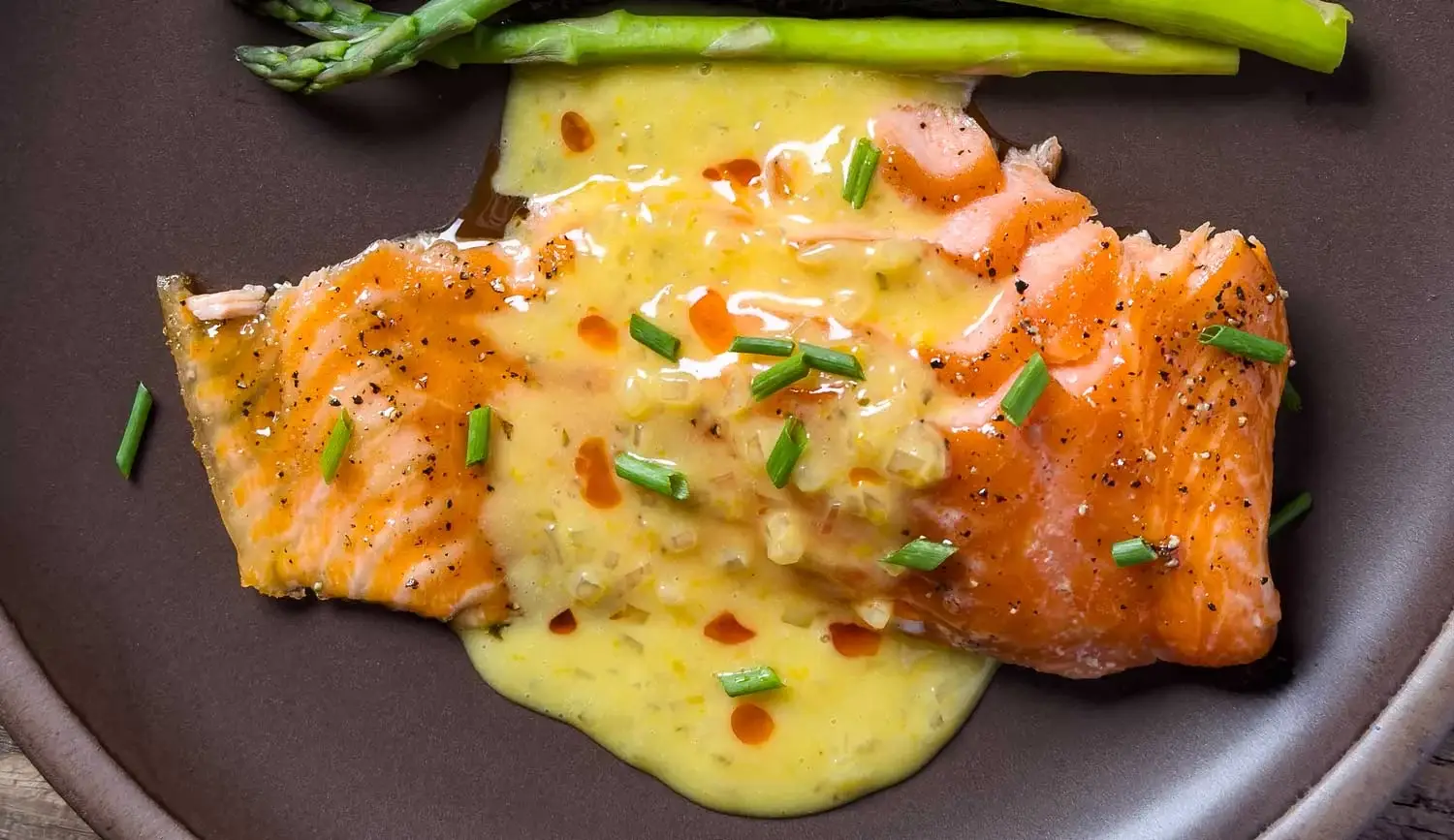
Well, folks, there you have it. Beautifully cooked fish, a glorious sauce that is very simple to make, and a few drops of chili oil make for a mouth watering meal. As you can see I served it with steamed asparagus. It’s a classic accompaniment for good reason. Plus, it’s also great with the beurre blanc, which I believe is the star of this show, and no one is stopping you from spooning some of that sauce over the asparagus, too. This is one of those meals you will continue to talk about for the next few days after you’ve eaten it. It’s that good.

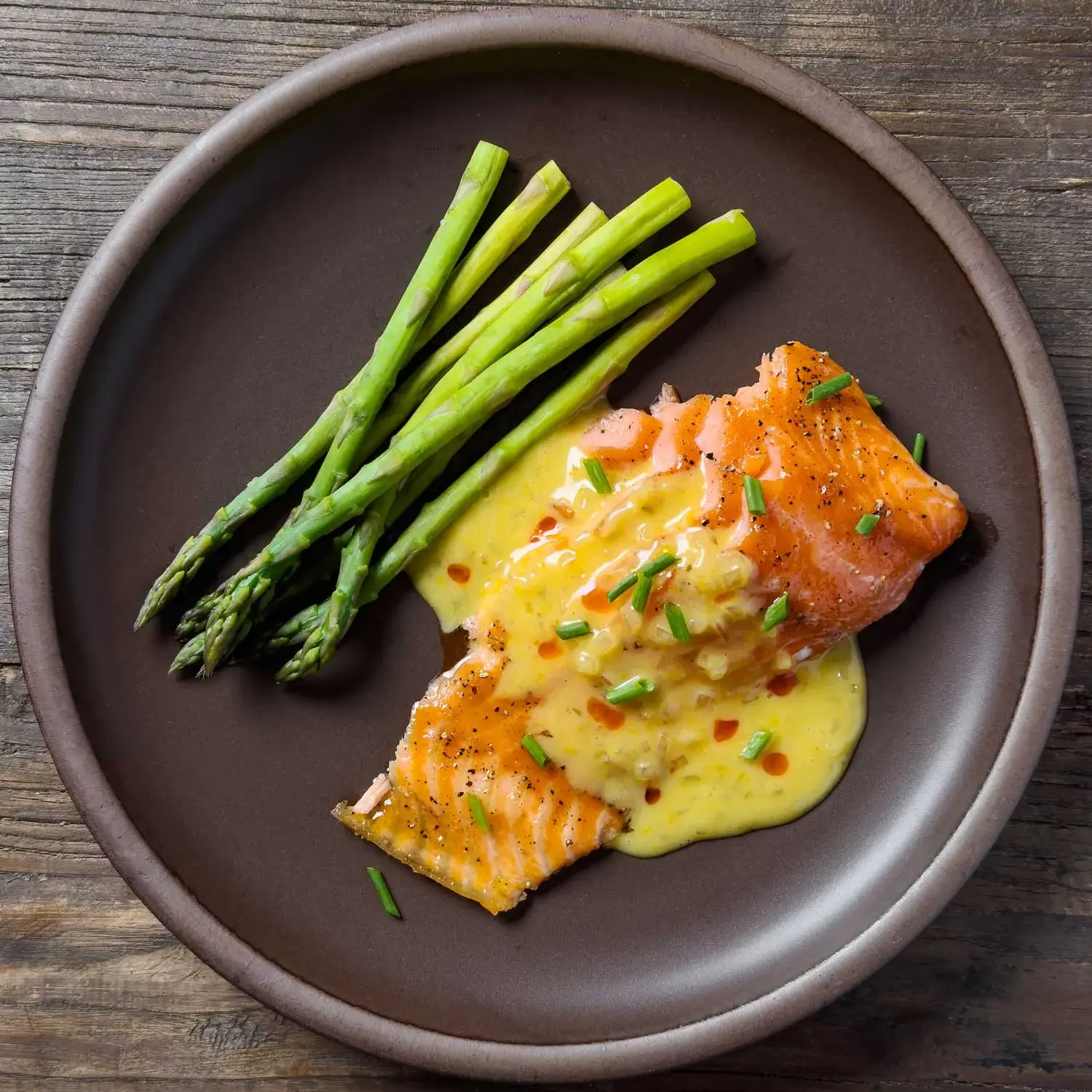
Steelhead Trout with Orange Beurre Blanc and Chili Oil
Slow roasted steelhead trout is topped with an orange flavored beurre blanc and a little chili oil. Both the beurre blanc and the chili oil are very easy to make. I promise! You'll end up with a meal you won't soon forget.
6
servingsKeep the screen of your device on
Ingredients
- Steelhead Trout
2 1/2 pounds steelhead trout filet
1/2 tablespoon light brown sugar
1/2 teaspoon fine sea salt
Black pepper
Chili oil, either store bought or homemade
1 tablespoon snipped chives
- Orange Beurre Blanc
3/4 cup fresh squeezed orange juice
Zest from 1 orange
1/2 cup dry white wine
1 large shallot (60g), very finely minced
1 teaspoon lemon thyme or plain thyme leaves, finely chopped
2 1/2 sticks unsalted butter, cut into tablespoon size slices, chilled
Fine sea salt
White pepper
1/2 teaspoon fresh lemon juice or white wine vinegar - Optional
Directions
- Steelhead Trout
- Preheat the oven to 250° with a rack in the center. Line a half sheet pan (13 x 18 inches) with parchment paper. Remove the trout from the fridge 30 minutes ahead of time. Place the trout on the lined sheet pan and rub the top side with the brown sugar, salt, and a few grinds of black pepper. Bake for 20 - 25 minutes, or until an instant read thermometer registers 125° - 130°. Remove from the oven.
- Divide the trout into serving portions, while lifting it off its skin, and transfer each one to dinner plates. Spoon on some of the orange beurre blanc, add a few drops of chili oil and sprinkle with the snipped chives. Serve and Enjoy!
- Orange Beurre Blanc
- In the meantime, make the beurre blanc. In a medium saucepan over medium heat, stir together the orange juice, zest, white wine, minced shallot, and lemon thyme. Bring to a boil and let simmer until the liquid is reduced to no more than 2 tablespoons. It will look syrupy.
- Turn the heat to medium low and whisk in 2 tablespoons of cold butter. As soon as it is melted add another couple of tablespoons. I control the heat by placing my hand on the bottom of the pan. If I can hold it there for no more than a second, it’s at the right temperature. If it’s too cool, place the pan back over medium low heat, checking often to make sure it hasn’t gotten too hot. Continue whisking in the butter until it’s all blended in. The sauce should be emulsified and creamy looking. This takes constant vigorous whisking, but should only take about 10 minutes from the time you put the first butter in the pan. Taste for seasoning. It will definitely need salt and I like to add a little white pepper, too. If the flavor seems flat, add 1/2 - 1 teaspoon lemon juice or white wine vinegar.
8 Responses
Hello, I would like to try this recipe. How much chipotle is used in the sauce? The ingredient is missing from the recipe. Thank you
Hi, Anita. Thanks so much for letting me know about this mistake. I have no idea how chipotle flakes ever came to be specified in the directions. I think I had initially thought I’d used them in the sauce, but then decided against it. I will edit the recipe and remove the mention of chipotle flakes. Sorry about this!!! I hope you enjoy the recipe, it’s a favorite of mine.
Hello Renée, thank you for your prompt reply. I did try the recipe tonight, which is a week day and because I have a busy schedule, I did have to take some short cuts. I used frozen steelhead. I won’t do that again. Nowadays, I prefer fresh but the cooking instructions did work and I can’t wait to try with fresh fish. For the sauce, I subbed heavy cream and a touch of corn starch for more the half of the butter, partly due to timing and just because I couldn’t do that much butter. My personal hang up. My guys and I really liked the sauce and I think the overall flavor was maintained. The sauce was really good with my sautéed Brussels sprouts (shaved) and roasted carrots with hot honey. I will make again. Also, I think you may have been onto something with the chipotle idea. Perhaps I will try that too. Thank you for a nice dinner.
I’m so glad it all worked out for you, Anita! As to the chipotle, I ended up going with chili oil as a finishing oil, so I thought that chipotle would be over kill. Know what I mean? But I’m with you in thinking the smokiness would be good in this. Again, I’m so glad you enjoyed it and I appreciate hearing from you. You’re very welcome!
I made this dish but I added 4 cloves of cut up garlic into the sauce as well as some heavy whipping cream right after the sauce was done.
The trout was delicious I added a tsp of Old Bay seasoning on top as well. I did use the chili oil and that added was the top.
My husband really enjoyed this dish. He said that it was a totally different take on fish dishes (lemon and butter). I really enjoyed it myself. We are big fresh fish eaters (PNW). This recipe is a keeper!
Thanks so much for letting me know you enjoyed it, Alexis! Your additions sound delicious!
nice recipe! i found that the sauce took a bit more time to reduce than advertised, but otherwise it came out great. the low and slow temp for the trout helped keep it from overcooking.
Thanks so much, Lucas. I’m so happy to hear you enjoyed the recipe. Low and slow for the fish never lets me down. As to the timing on the reduction, it all depends on the size of your pot, the temperature at which you’re cooking it, etc. The important part is to let it cook down until it’s nice and syrupy. Sounds to me like you nailed it. Thanks so much for letting me know!